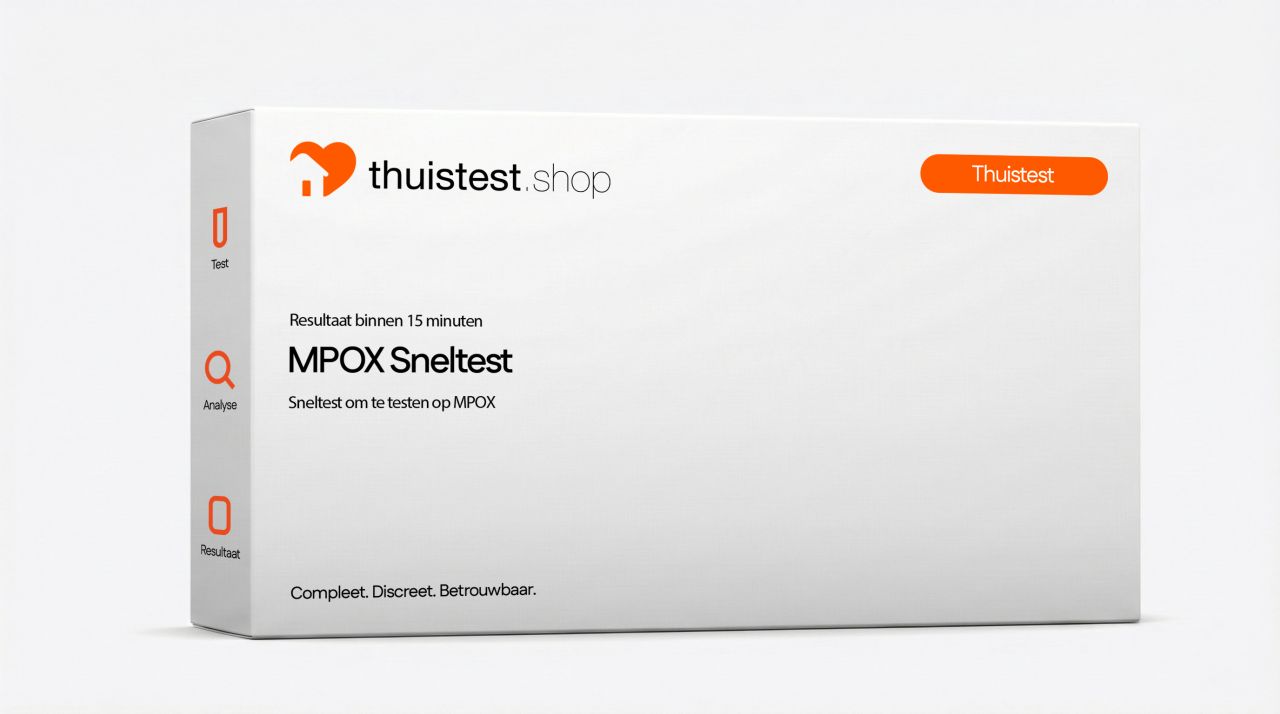
MPOX Self-Test
€ 21,48
PROFESSIONAL
Out of stock, available for pre-order
1
MPOX Self-Test
Product Details
TEST IS ONLY FOR PROFESSIONAL USE - Available mid-August 2026
The MPOX Self-Test is a rapid at-home test designed for individuals seeking quick clarity regarding symptoms that may align with MPOX. You take a swab yourself and typically read the result within 15 minutes. This is especially useful if you feel uneasy after a risky contact or notice skin lesions and prefer not to wait.
This rapid test serves as an initial indication. It helps you decide what makes sense: contacting a doctor immediately, isolating, or considering other causes. By testing at home, you maintain control and keep it discreet.
What is MPOX?
MPOX is a viral infection that can be transmitted between people. It typically spreads through close contact, such as skin-to-skin contact with lesions, contact with bodily fluids, or via contaminated materials like bedding. In some cases, droplets can play a role during prolonged close contact.
Symptoms often start with flu-like signs. This can be followed by a skin rash with bumps, blisters, or scabs. Not everyone experiences the same progression, which is why testing is helpful when in doubt, especially if you notice unexplained skin lesions.
About the MPOX Self-Test
The MPOX Self-Test is a rapid antigen test. This means the test detects a component of the virus (an antigen) in the collected sample. The test involves taking a swab of fluid from a skin lesion or a throat swab, depending on what suits your situation and the instructions provided.
The test provides an indication: positive, negative, or invalid. A positive result suggests MPOX is likely present. A negative result suggests MPOX is less likely at that time. An invalid result means the test was not performed correctly or the control line is missing. Always follow the steps in the manual to obtain the most reliable result.
Who is this self-test for?
The MPOX Self-Test is intended for individuals seeking quick clarity about symptoms potentially linked to MPOX, especially when there are skin lesions, blisters, or scabs. It is suitable for those feeling uneasy after close contact, such as intensive skin-to-skin contact or contact with suspicious lesions. This test is also practical for those who value privacy or wish to test outside regular office hours. It is most effective when there are visible lesions to swab, as this typically provides the best indication. If you are pregnant, have a weaker immune system, or feel significantly unwell, it is advisable to seek medical evaluation promptly, even if you first test at home.
What if you have symptoms?
If you have symptoms, it’s helpful not to remain in doubt. MPOX can start with flu-like symptoms such as fever, muscle aches, and fatigue, followed by a rash with painful blisters or bumps. A self-test can provide an initial indication, but the result should always be considered alongside the symptoms. A positive result warrants immediate contact with a doctor and avoiding intimate contact. It’s also wise to take hygiene seriously and avoid sharing items like towels. If you test negative but your symptoms persist, medical evaluation is still logical, as timing or sample collection can affect the result. If symptoms worsen quickly or become very painful, consulting a doctor is the safest step.
General Note
A self-test does not replace medical evaluation. If you test positive, have severe symptoms, notice a rapid spread of skin lesions, experience intense pain, or are uncertain during pregnancy, contact a doctor. This is also important if you belong to a high-risk group or have a weakened immune system.
If you have clear MPOX symptoms but test negative, a lab test (like PCR) may still be necessary. Don’t rely solely on the rapid test if your situation feels serious.
Frequently Asked Questions About the MPOX Self-Test
When is the best time for an MPOX Self-Test?
The best time is when there are clear skin abnormalities, such as blisters or scabs, allowing a sample to be taken from the skin. Testing immediately after a risky contact without symptoms often does not provide a clear answer, as the incubation period can be days to weeks. If you only have a fever in the first few days, it may still be difficult to obtain a good skin sample. Testing becomes more meaningful if skin lesions appear later. For severe symptoms or rapid worsening, it’s wise to contact a doctor even if you haven’t tested yet.
Is MPOX the same as monkeypox?
Yes, MPOX is the name now commonly used for what was previously called monkeypox. It refers to the same disease. Some people search for “monkeypox test” or “monkeypox self-test.” The transmission primarily occurs through close contact, such as skin contact and contact with blisters. A home MPOX test can help when in doubt, but for clear symptoms, seeking advice from a healthcare provider remains important, especially if you feel very unwell or experience significant pain from the skin lesions.
What should someone do with a positive result?
If positive, it’s wise to immediately limit contact with others. Cover skin lesions and use personal towels and bedding. Avoid sex and hugs until you receive advice. Then contact a healthcare provider or public health service for guidance and confirmation. They can also advise on isolation and informing contacts. If you experience pain, a doctor can help with pain relief and wound care. A positive result can be concerning, but it also provides direction, allowing you to act responsibly and protect others.
Can someone test negative but still have MPOX?
Yes, this can happen, especially if the sample was not collected properly or if the skin lesion was not suitable. It can also occur if the symptoms are still in an early stage. That’s why it’s important to consider the result in conjunction with your symptoms. If you have clear blisters and feel unwell, consultation is advisable even with a negative result. Retesting may sometimes be necessary, or a different approach might be better. If the symptoms suggest herpes, chickenpox, or an allergy, that could also explain the situation. If symptoms persist, seek medical evaluation.
When should someone see a doctor immediately?
Immediate contact is advisable for high fever that doesn’t subside, severe pain, difficulty swallowing or drinking, or symptoms affecting the eyes. Rapid expansion of skin lesions also warrants attention. Additionally, prompt care is essential during pregnancy. If you feel very unwell or cannot arrange proper isolation at home, a doctor or public health service can provide practical advice. An MPOX Self-Test is a helpful tool, but it should not prevent you from addressing serious signs. When in doubt, professional help is often the safest option.
How is MPOX transmitted?
MPOX spreads primarily through intensive and direct contact. This can include skin-to-skin contact with rashes or blisters. Contact with bodily fluids also poses a risk. Additionally, contaminated materials, such as towels, bedding, or clothing that came into contact with lesions, can contribute to transmission.
Sex is not a “separate” transmission route, but during sex, there is often significant skin contact, increasing the risk. The key factor is the level of contact, not a specific action. If you had contact with someone with suspicious lesions or were in an environment with close interactions, testing might be a logical step.
Incubation Period and Optimal Testing Time
After infection, symptoms typically begin within a few days to weeks, often between 5 and 21 days. Testing is most effective when symptoms are present or when clear skin lesions have developed.
Testing on the first day of vague throat pain may be too early. A rapid test works best when there is enough material to detect. This is why a swab from a skin lesion is often more conclusive than “testing without lesions.” Always follow the test kit instructions. If unsure about timing, medical advice is the safest choice.
Early Symptoms
In the initial phase, symptoms often resemble the flu, including fever, chills, muscle aches, and headaches. Fatigue and swollen lymph nodes in the neck, armpit, or groin may also occur.
This stage is unpleasant but not specific enough to confirm MPOX. Common flu or other viruses can cause similar symptoms. That’s why the combination with skin symptoms is so important. If flu-like symptoms are followed by a noticeable rash, testing and taking action is advisable.
Recognizing Skin Rash and Blisters
The skin rash may start as red spots or bumps, which can develop into blisters or pustules that may be painful. Later, scabs may form. The lesions can appear on various parts of the body, such as the genitals, anus, hands, face, or torso.
Not everyone develops many lesions. Sometimes there are only a few, which can cause uncertainty. “Is this a pimple, an ingrown hair, or something else?” In such cases, the MPOX Self-Test can serve as a first check, especially if it aligns with your risk.
Symptoms That Could Indicate Other Conditions
Skin lesions can have many causes, including herpes, impetigo, scabies, allergies, eczema, or irritation from shaving. Insect bites or regular hair follicle inflammations can also resemble blisters.
If the primary symptom is itching without significant pain, another cause is more likely. Painful blisters in one area may suggest herpes. Scabs around the nose or mouth could indicate impetigo. A negative MPOX test doesn’t automatically mean “nothing is wrong.” It means MPOX is less likely; consider other possibilities if symptoms persist.
Reading Results and Actions for a Positive Outcome
With a positive result, the next step is typically to contact a doctor or the appropriate healthcare line in your region. Avoid intimate contact and limit close interactions with others. Don’t share towels, and sleep separately if possible until you receive clear instructions.
Display prices in:EUR