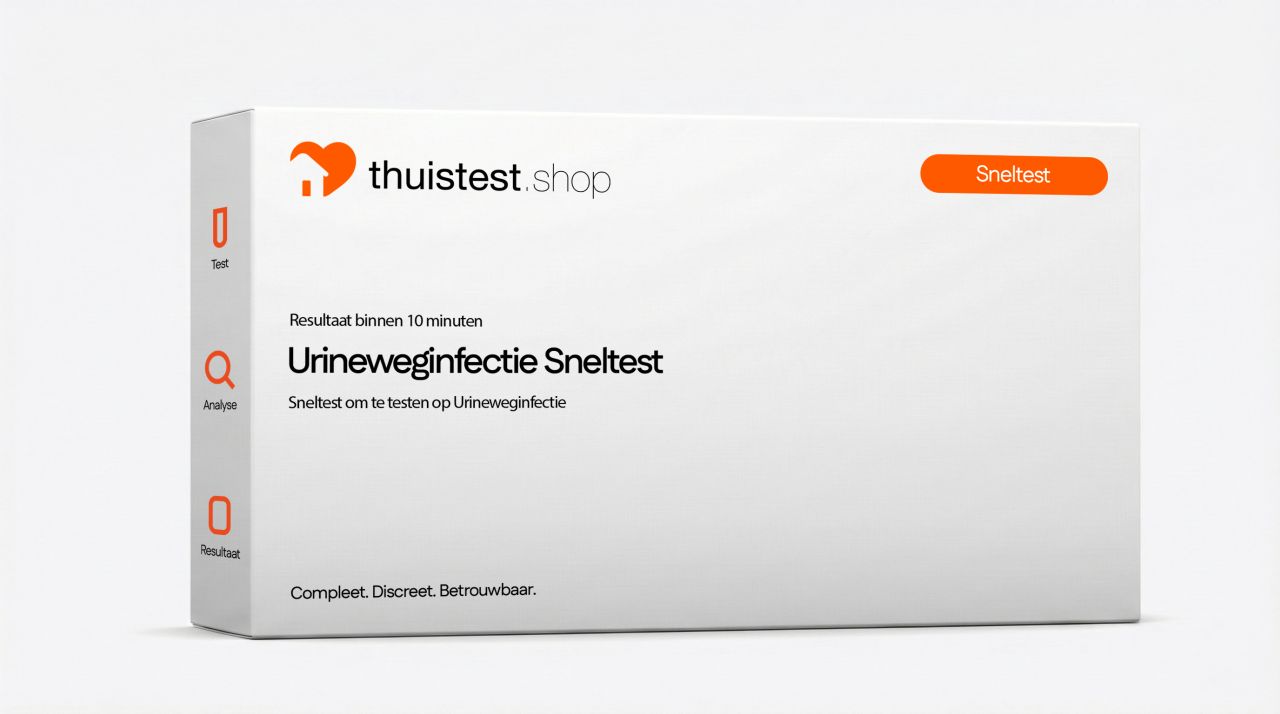
Urinary Tract Infection Self-Test
€ 16,52
PROFESSIONAL
Out of stock, available for pre-order
1
Urinary Tract Infection Self-Test
Product Details
The Urinary Tract Infection Self-Test is a rapid home test for people with symptoms that may indicate cystitis or another urinary tract infection. You test at home using urine and quickly receive a clear indication. This is useful if you experience burning when urinating, need to urinate frequently, or have a nagging feeling in the lower abdomen. You do not have to wait for an appointment to get some initial clarity.
This rapid test is well suited to busy schedules and situations where privacy is important. It also gives people who experience symptoms more often a better sense of control, so they do not have to keep guessing. The result helps you decide: wait and see while drinking extra fluids, or contact a doctor.
What is a urinary tract infection?
A urinary tract infection usually occurs when bacteria enter the bladder through the urethra. This can irritate the bladder wall. It often causes pain or a burning sensation when urinating. Sometimes it goes away on its own. Sometimes treatment is needed.
In some people, the infection can travel upward toward the kidneys. This is often called a kidney infection. In that case, someone usually feels more ill. Think of fever and pain in the side. This requires medical help sooner.
About the urinary tract infection home test
The Urinary Tract Infection Self-Test uses urine test strips. These measure substances in the urine that may indicate inflammation. Usually, these are leukocytes and nitrite. Leukocytes are immune cells. Nitrite can be produced by certain bacteria. The combination of symptoms and test result gives the best assessment.
The test is intended as a first check. It is not a complete diagnosis. A positive result makes it more likely that an infection is present. A negative result makes an infection less likely, but does not always rule it out. Timing and correct use are especially important.
Who exactly is this home test for?
The Urinary Tract Infection Self-Test is intended for people with symptoms that may indicate cystitis or another urinary tract infection. Examples include burning when urinating, frequently passing small amounts of urine, strong urgency, or a nagging feeling in the lower abdomen. The test is suitable for someone who wants quick clarity without immediately having to make an appointment. It can also help people who regularly experience the same symptoms avoid relying purely on guesswork. This home test is mainly suitable for adults with mild to moderate symptoms. During pregnancy, in men with symptoms, in children, or in people with a weakened immune system, it is usually wise to seek medical assessment sooner.
General note
In case of fever, chills, pain in the side, or if someone feels truly ill, it is wise to contact a doctor immediately. This also applies during pregnancy, in children, in men with symptoms, and in people with a weakened immune system. Use the test calmly and follow the reading time exactly. Reading the result too late or too early can lead to uncertainty.
Frequently Asked Questions About the Urinary Tract Infection Self-Test
How reliable is a Urinary Tract Infection Self-Test?
Urine test strips usually provide a good first indication, especially with typical symptoms. The strip often measures leukocytes and nitrite. A positive nitrite result often strongly indicates bacteria. However, there are limitations. Not all bacteria produce nitrite. In that case, nitrite may remain negative. An infection may also be very early, meaning values are still low. Drinking a lot can also dilute the urine. This makes a signal less visible. That is why it helps to always combine the result with symptoms. In case of severe symptoms, fever, or pain in the side, it is wise to contact a doctor, even if the strip is negative.
Which urine is best for a home urine test?
Many people choose morning urine because it is often more concentrated. This increases the chance that the strip will show something if inflammation is present. If morning urine is not possible, midstream urine during the day is also fine. This means first urinating a little, then collecting urine, and then continuing to urinate. This reduces contamination from the outside. Also try not to drink excessive amounts shortly before the test. Urine that is too diluted can make the result less clear. Finally, good lighting is important when reading the result, so you can compare the colours properly.
What should someone do with a positive result?
With a positive result, it is wise to consider how severe the symptoms are. With mild symptoms, drinking extra fluids and waiting briefly may sometimes be sufficient. However, contacting a doctor is wise if the symptoms are severe, persist for longer, or if someone belongs to a risk group. Think of pregnant women, men, children, kidney problems, or reduced immunity. Someone should also not wait in case of fever or pain in the side. A doctor can assess whether treatment is needed and can arrange urine testing. In addition, avoid holding in urine and keep the lower abdomen warm if that feels comfortable.
Can someone have a negative result and still have cystitis?
Yes, that is possible. A negative strip does not always rule out an infection. This can happen if it is too early, if the urine is diluted, or if the bacteria do not produce nitrite. The strip or reading time may also not have been used correctly. If the symptoms are typical and significant, consultation is wise, even with a negative result. Another cause may also be involved, such as vaginal irritation, an STI, or a kidney stone. If symptoms do not improve after 48 hours, or if new symptoms such as fever develop, contacting a doctor is usually the best step.
How can someone help prevent cystitis?
Drinking enough fluids and urinating regularly are the basics. It is better not to hold in urine for a long time. Urinating after sex can help some people. For women, wiping from front to back helps. Avoid harsh soap and vaginal sprays, as these can disrupt the balance. Preferably wear breathable clothing and underwear. If someone has frequently recurring symptoms, it is wise to discuss this with a doctor. Sometimes contraception, irritation, or incomplete bladder emptying plays a role. Prevention is often a combination of small habits that together can make a big difference.
Symptoms that often fit a urinary tract infection
A urinary tract infection often causes recognisable symptoms, but the pattern can vary. The most typical symptom is burning when urinating. Someone may feel that urinating “stings” or feels abrasive. There is also often a strong urge to urinate. Someone may need to go repeatedly, but only pass small amounts. This can be especially unpleasant at night.
Other common symptoms include a nagging or pressing feeling in the lower abdomen and urine that smells stronger or appears cloudy. Sometimes there is some blood in the urine. This can be alarming, but it can occur with bladder irritation. In some people, the symptoms are mild. In others, they are immediately bothersome.
Also pay attention to how someone feels overall. With a simple bladder infection, someone often feels “not quite well”, but not seriously ill. If someone becomes truly ill, with fever or pain in the side, this is more consistent with an upper infection. In that case, waiting is not wise.
Cystitis versus kidney infection
Cystitis is located low, in the bladder. The symptoms mainly revolve around urination. A kidney infection is located higher, near the kidneys. In that case, fever, chills, nausea, and pain in the side or back are more common. General weakness may also occur.
This difference is important because a kidney infection requires treatment sooner. A home test can provide indications of inflammation, but it does not show exactly where the infection is located. The symptoms provide that context. If an upper infection is suspected, a doctor should be involved.
When testing is useful
Testing is useful when someone has typical symptoms and wants quick clarity. For example, burning when urinating and urgency, without fever. It is also helpful when in doubt, such as with mild symptoms that have just started. The test can then help prevent someone from continuing with uncertainty for too long.
Testing is less useful if someone has no symptoms. It is also less useful shortly after starting antibiotics. The picture may already have changed by then. With recurring symptoms, testing can be useful, but it is also wise to have the causes assessed. Repetition can become a pattern.
What exactly does the urinary tract infection test measure?
Most urinary tract infection tests measure the following components:
- leukocytes: often higher with inflammation.
- nitrite: can become positive due to certain bacteria.
- sometimes also blood: can fit with bladder irritation.
Not all bacteria produce nitrite. That is why nitrite can be negative while an infection is still present. Drinking too much can also dilute the urine. This makes signals less clear. That is why it remains important to assess the result together with symptoms.
Step by step: how to do a urine test at home
Proper collection prevents uncertainty. Work calmly and follow the instructions for the test strip.
- wash your hands thoroughly and use a clean collection cup.
- preferably collect midstream urine. So first urinate a little, then collect.
- briefly dip the strip into the urine, as instructed.
- tap off excess urine and place the strip flat.
- start a timer and read the strip at the correct time.
- compare the colours with the chart in good light.
Morning urine is often more concentrated. This can help produce a clear result. Also avoid drinking excessive amounts shortly before the test. This can make the urine too diluted.
Result: positive, negative, or invalid
A positive result means there are indications of inflammation in the urine. With clear symptoms, this often fits with cystitis. A negative result means the strip does not show strong indications. An infection is then less likely, but it is not always ruled out.
A result can also be invalid or unclear. This can happen, for example, if it is read incorrectly, if the strip is too wet, if the test has expired, or if you look too late. When in doubt, retesting makes more sense than continuing to guess.
Positive result: what now?
With a positive result, it is sensible to look at the severity and duration of the symptoms. With mild symptoms, drinking extra fluids and waiting briefly may sometimes be sufficient. Still, if symptoms persist or are clearly painful, contacting a doctor is wise. Especially if you often have infections, or if you are in a risk group.
These are logical next steps with a positive result:
- drink enough water and urinate regularly.
- do not wait too long in case of severe pain or worsening symptoms.
- contact a doctor if symptoms remain significant for longer than one to two days.
- call immediately in case of fever or pain in the side.
Treatment depends on the situation. Sometimes antibiotics are needed. Sometimes waiting is possible. The test mainly helps to make that choice faster.
Negative result but still symptoms
A negative test can be reassuring, but symptoms remain leading. If burning when urinating continues, or gets worse, something may still be going on. It may also have another cause, such as irritation from soap, an STI, vaginal irritation in women, or a kidney stone.
With persistent symptoms, this is logical:
- repeat the test after 24 hours if you think it may have been too early.
- consider medical assessment if symptoms do not improve after 48 hours.
- contact a doctor if new signs occur, such as fever, flank pain, or increasing blood.
Negative therefore means: less indication of infection at this moment. It does not mean you should ignore your symptoms.
When should you call a doctor immediately?
Call a doctor immediately in case of:
- fever, chills, or feeling ill
- pain in the side or back
- nausea or vomiting
- pregnancy
- children with symptoms
- men with symptoms
- visible blood that is significant or continues to increase
- confusion or drowsiness in older people
These are signs where you do not want to wait for a retest. Quick assessment is safer.
Prevention and recovery tips
Some people are more prone to urinary tract infections. Simple habits can help. Drink enough fluids throughout the day. Urinate regularly and do not hold it in for too long. Urinate after sex if that works for you. Use mild products and avoid harsh intimate soap. Wear breathable clothing if you are prone to irritation.
For recovery, rest and warmth on the lower abdomen can help. Keep drinking well. And listen to your body. If things are not improving, contacting a doctor is the best step. The Urinary Tract Infection Self-Test is mainly there to give you quick reassurance, without unnecessary waiting or guessing.
Display prices in:EUR