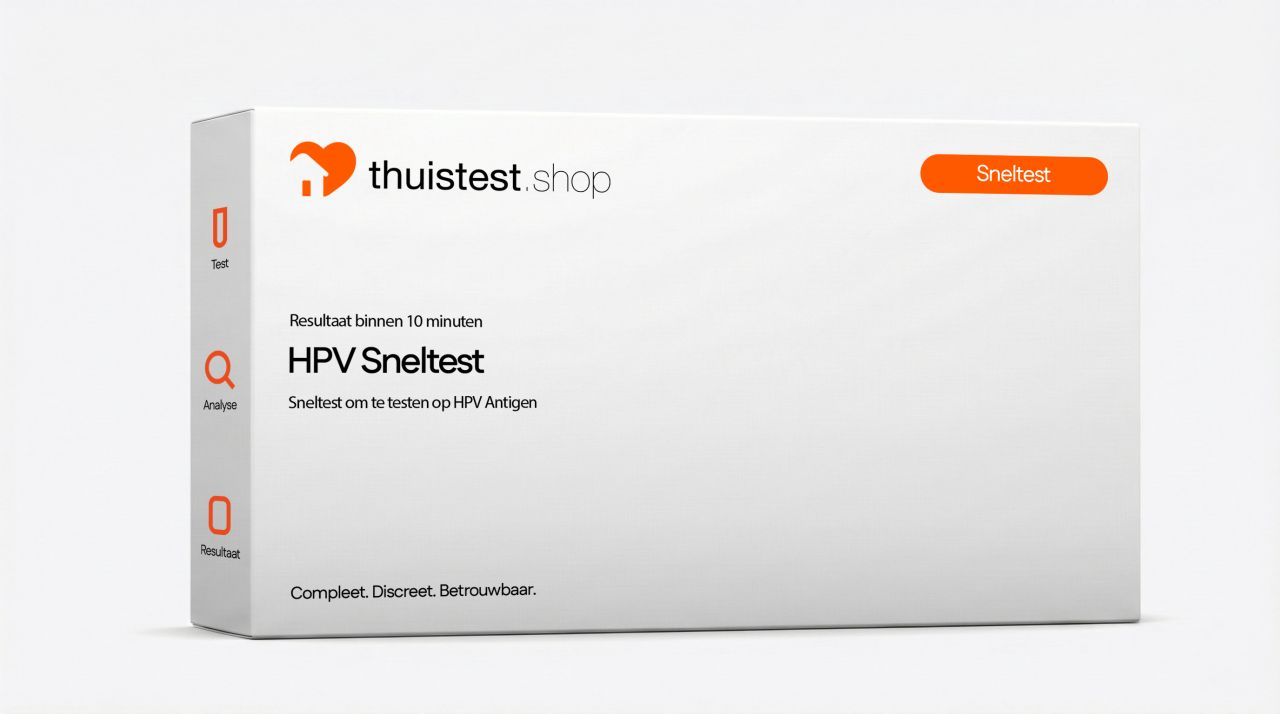
HPV Antigen Self-Test
€ 28,92
PROFESSIONAL
Out of stock, available for pre-order
1
HPV Antigen Self-Test
Product Details
TEST IS ONLY FOR PROFESSIONAL USE - Available mid-August 2026
The HPV Antigen Self-Test is a rapid at-home test for individuals seeking clarity about symptoms that may indicate HPV. This is particularly helpful for those who prefer to check themselves first or cannot immediately schedule an appointment. The test is designed as an initial indication. You can test at home, at your own pace, and quickly obtain results by following the steps in the manual.
This test is suitable for situations where someone is concerned after unprotected contact, notices visible spots around the genital area, or experiences recurring irritation and wants to rule out HPV as a factor. For those who value privacy, a discreet home test is a logical choice.
What is HPV?
HPV stands for human papillomavirus, a common virus transmitted through intimate skin-to-skin contact. Many people contract HPV at some point, often without realizing it. In many cases, the body clears the virus on its own.
Certain types of HPV can cause genital warts. Other types usually do not cause immediate symptoms but may pose long-term risks. As a result, the topic can be sensitive for many people. At the same time, it helps to remain pragmatic. HPV is common, and testing is primarily intended to provide guidance: what is the next logical step?
About the HPV Self-Test
The HPV Antigen Self-Test is designed to perform an initial check for HPV at home. Follow the instructions step by step and then read the result. The test is primarily intended as an indicator. The result helps you decide whether it’s wise to consult a doctor or if another cause is more likely.
Important to know: HPV tests can differ in purpose and method. Not every test provides information about all types of HPV. Therefore, it’s wise to view the result as a practical starting point. A positive result often warrants confirmation and advice. A negative result makes HPV less likely, but symptoms should still be the guiding factor.
Who is this home test for?
The HPV Antigen Self-Test is intended for individuals seeking quick clarity about HPV concerns, especially when there are symptoms or visible spots around the genital area. It is suitable for those who feel uneasy after unprotected contact and prefer to check at home first. It is also a practical first step for those unsure about bumps that may resemble genital warts. Additionally, the test is ideal for those who value privacy and wish to test outside office hours. It is primarily an indicative test: it provides direction but does not replace medical evaluation. During pregnancy, with a weakened immune system, or with recurring symptoms, it’s advisable to involve a doctor sooner, even if testing at home first.
What if you have symptoms?
If symptoms are present, it’s important not to delay. HPV often involves spots or warts that do not go away on their own or recurring irritation. A home test can provide an initial indication, but it’s important to use the result pragmatically. A positive result warrants contacting a doctor for evaluation and advice. Treating the skin on your own can cause irritation and make the situation less clear. A negative result makes HPV less likely, but symptoms could stem from other causes, such as shaving, eczema, fungus, herpes, or another STI. If spots persist, become painful, or spread, medical evaluation is the best step.
General Note
A home test is not a substitute for medical evaluation. Contact a doctor in cases of severe pain, fever, rapidly worsening symptoms, bleeding, non-healing wounds, or uncertainty during pregnancy. Persistent symptoms or recurring spots also warrant medical evaluation.
Avoid using the test during menstruation and refrain from starting skin or mucous membrane treatments right before testing, as this may affect the result. Always follow the timing and instructions in the test kit.
Frequently Asked Questions About the HPV Antigen Self-Test
Can someone have HPV without symptoms?
Yes, this is very common. Many people experience no symptoms of HPV—no warts and no pain. However, they may still carry the virus. This uncertainty often arises after unprotected contact. A home HPV test can help as a first step, providing direction so you’re not left guessing. A negative result doesn’t rule out a very recent infection. If concerns persist, seek additional advice. A positive result is a signal to make a plan with a doctor for clarity and peace of mind.
Is an HPV Antigen Self-Test the same as a test at the doctor’s office?
No, they are usually not the same. A home test is designed for quick, accessible information. Healthcare professionals may use different methods or broader tests. Screening also has its own purpose and approach. A home test should be seen as a tool, not a replacement. A positive result should be discussed with a healthcare provider. If symptoms persist despite a negative result, professional evaluation is recommended to avoid uncertainty.
What should someone do with a positive result?
If the result is positive, it’s important to stay calm. HPV is common and often resolves on its own. However, follow-up steps are advisable. If warts are present, a doctor can evaluate and treat them. If there are no symptoms but the test follows unprotected contact, consider other STIs as well. In some cases, broader testing may be more appropriate. For women, regular screenings remain crucial. A positive result is a signal to take targeted action, not a reason to panic.
Can a condom always prevent HPV?
A condom reduces the risk but doesn’t always prevent HPV. HPV spreads through skin-to-skin contact, and a condom doesn’t cover all skin. However, using condoms is still a smart choice as it also reduces the risk of other STIs. Regular testing is advisable for those with multiple partners to maintain peace of mind. A discreet HPV test can be a good starting point after risky contact, followed by further STI testing if necessary.
When is it better to go directly to a doctor?
Immediate contact is advisable for severe pain, bleeding, fever, or abdominal pain. Rapidly growing spots or persistent irritation also warrant a doctor’s visit. A doctor can diagnose and start treatment. For those feeling anxious, a consultation can provide reassurance. While a home test helps with pre-selection, not all situations are suitable for self-testing. If symptoms persist or worsen, seeking medical help is the safest course of action.
How is HPV transmitted?
HPV is usually transmitted through intimate skin contact, which can occur during vaginal, oral, or anal sex. Penetration isn’t always necessary; skin contact around the genital area can suffice. This means someone can contract HPV even when using a condom. While a condom reduces risk, it doesn’t eliminate it entirely.
The risk of transmission increases with multiple partners, but HPV can also occur within a stable relationship. The virus may have been present for some time without symptoms, making it difficult to pinpoint when it was contracted. Testing can help regain clarity in such situations.
Symptoms of HPV: What to Look For
Many people have no symptoms, which is an important point. A negative feeling after risky contact doesn’t necessarily mean something is wrong. Similarly, symptoms don’t always indicate HPV.
When HPV does cause symptoms, it often involves genital warts—small bumps or cauliflower-like spots around the penis, labia, anus, or groin. These can itch or irritate but may also be painless. Sometimes they are small and barely noticeable. In cases of doubt, it’s logical to consider testing or consulting a doctor.
Other types of HPV typically don’t cause visible spots, which is why regular screening for women is so important. A home test can help with concerns but does not replace screening.
When is an HPV Antigen Self-Test useful?
Testing is particularly useful when there’s a specific reason, such as:
- Visible spots that may resemble warts
- Anxiety after unprotected contact and a need for an initial check
- Recurring symptoms requiring targeted action
- A desire for discreet testing outside office hours
A home test is less useful for those without symptoms who want to test “just in case” without any risk factors. In such cases, consulting a doctor or following regular screening advice (for women) is often more appropriate.
Timing also matters. Testing too early may yield unclear results. If unsure about the right moment, consult the test instructions or opt for medical evaluation if concerns are significant.
Preparing for a Reliable Result
A reliable test starts with calm preparation. Read the manual thoroughly before starting. Gather all necessary items and use a timer. Avoid testing during menstruation. Also, refrain from using creams, ointments, or harsh cleansers shortly before the test, as these can affect the sample.
If a recent treatment for warts or skin irritation was used, it may be wise to wait before testing to avoid skewed results. In cases of severe symptoms or rapid progression, medical evaluation is preferable to delaying.
Result Interpretation: Positive, Negative, or Invalid
- The test typically provides one of these outcomes:
- Positive: Indications consistent with HPV are detected.
- Negative: HPV is less likely according to this test.
- Invalid: The control failed, or the steps were not followed correctly.
For a positive result, the next step is often to contact a doctor for advice and, if appropriate, confirmation. This is especially true if visible warts are present, symptoms worsen, or anxiety persists. Treatment depends on the symptoms and location. Avoid self-treatment, as it often leads to more irritation and uncertainty.
For a negative result, HPV is less likely within the scope of this test. However, if symptoms persist, consider other causes like shaving irritation, eczema, fungus, bacterial imbalance, or another STI. Persistent spots warrant medical evaluation, even with a negative result.
For an invalid result, retesting is necessary. This often occurs due to timing issues, insufficient sampling, or missing the reading window. If uncertain, take your time and retest following the instructions.
Display prices in:EUR