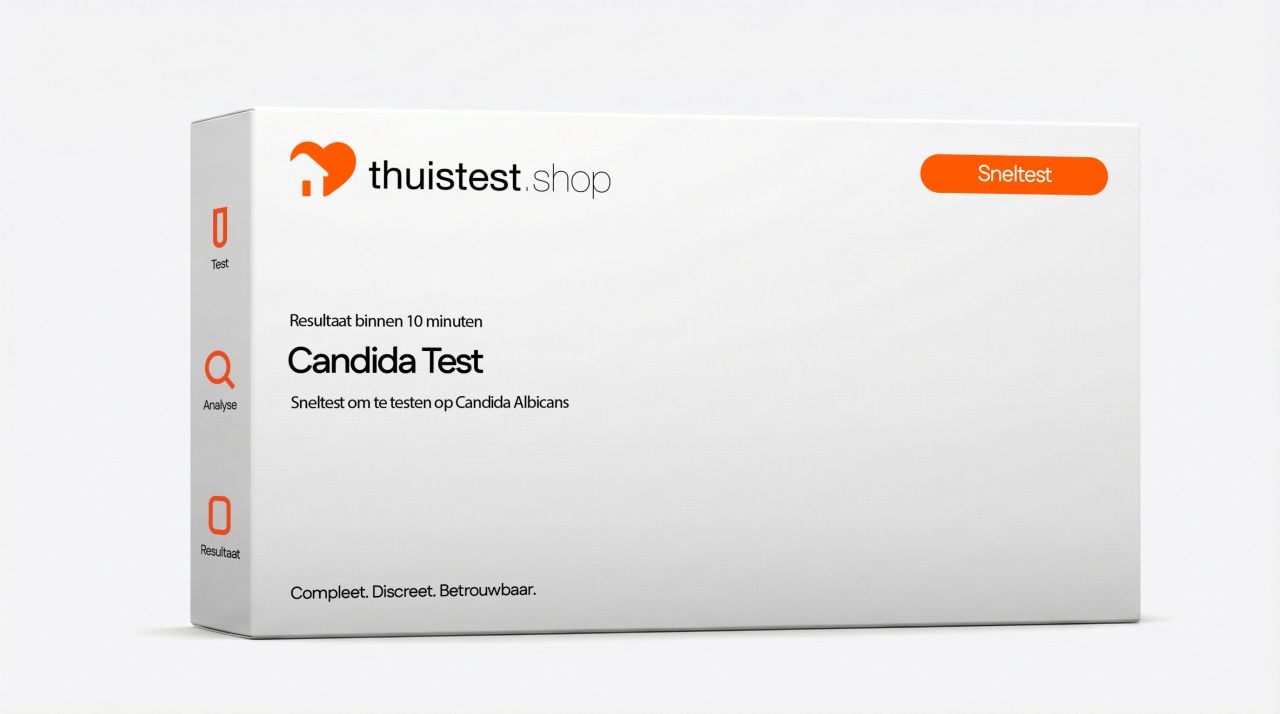
Candida Self-Test
€ 49,58
PROFESSIONAL
Out of stock, available for pre-order
1
Candida Self-Test
Product Details
TEST IS ONLY FOR PROFESSIONAL USE - Available mid-August 2026
The Candida Self-Test is a quick home test for women experiencing symptoms that may indicate a vaginal yeast infection. The test uses a vaginal swab and typically provides results within 10 to 15 minutes. This is convenient for those who want to quickly find out if Candida albicans is likely involved, especially when experiencing symptoms like itching, irritation, or changes in discharge.
This test is particularly helpful in cases of uncertainty. For instance, when someone doesn’t have time for an appointment or prefers to check at home first. It’s also useful for recurring symptoms, providing clarity without constant guessing. The test is easy to use and is suitable for those who want to test discreetly at their convenience.
What is Candida?
Candida is a yeast that naturally occurs on the skin and mucous membranes. Usually, it doesn’t cause problems, but sometimes Candida can overgrow, leading to a yeast infection. The most common type is a vaginal yeast infection, often caused by Candida albicans.
Such overgrowth can occur when the balance in the vagina changes. This can happen after taking antibiotics, due to hormonal fluctuations, stress, or a weakened immune system. Vaginal flora can also become temporarily imbalanced due to irritation or changes in hygiene products. While the symptoms can be uncomfortable, they are usually treatable once the cause is identified.
About the Candida Home Test
The Candida Self-Test is designed for the qualitative detection of Candida albicans. This means the test indicates whether Candida albicans is likely present, but not the amount. You take a vaginal swab yourself, process it according to the instructions, and read the result on the test cassette.
The test is intended for women experiencing symptoms such as itching, redness, irritation, burning sensations, or changes in discharge. It’s a practical first step, especially for those seeking quick clarity. A positive result suggests Candida as the likely cause. A negative result makes Candida less likely, pointing to other potential causes.
Who is this test for?
The Candida Self-Test is for women with symptoms that may indicate a vaginal yeast infection. These include itching, redness, irritation, or a burning sensation around the vagina. It’s also helpful when there’s a change in discharge, providing quicker direction. This test is ideal for those seeking quick clarity, whether due to scheduling difficulties or the need for privacy. It’s also useful for women who have had a yeast infection before and recognize the symptoms but prefer not to guess this time. For recurring symptoms, the test can help determine whether Candida is likely again or if another cause is more plausible.
What if you have symptoms?
If someone has noticeable symptoms, it’s wise not to delay addressing doubts. A Candida Self-Test can be a first step, especially for typical symptoms. A positive result suggests targeted treatment or seeking advice, particularly for severe itching, pain, or recurrent symptoms. A negative result makes Candida less likely, and it’s worth considering other causes like bacterial vaginosis, irritation from products, or an STI. If symptoms worsen quickly, involve fever, bleeding, wounds, or abdominal pain, consulting a doctor is the safest choice. This also applies during pregnancy or with a weakened immune system.
General Note
This rapid test is a tool, not a replacement for medical examination. For severe pain, fever, bleeding, wounds, or rapidly worsening symptoms, it’s advisable to contact a doctor immediately. The same applies during pregnancy, with significantly reduced immunity, or for persistent recurring symptoms.
Important: Avoid testing during menstruation. Do not wash the genital area immediately before testing. Refrain from antibiotics if recently used, and wait after probiotics. These steps reduce the chance of a skewed result.
Frequently Asked Questions About the Candida Self-Test
How quickly are the results available?
Results are usually readable within a short time, often within 15 minutes. Follow the timing in the manual closely. Checking too early might miss a faint test line, while checking too late may cause confusion. Use a timer and place the cassette on a flat surface. If no control line appears, the test is invalid and should be repeated. When in doubt, one careful repetition is better than multiple rushed attempts.
Can someone with a desire for children use the test?
For those with a desire for children, testing before treating based on intuition can be helpful. The sampling is simple, but medication choices may require more caution during a potential pregnancy. Consulting a healthcare provider is advisable for a positive result, recurrent symptoms, or doubts, especially with abdominal pain, bleeding, or fever. The test provides direction, but the next step should match the stage and severity of symptoms.
Is Candida the same as an STI?
Candida is not an STI. It’s a yeast often already present and only causes symptoms when it overgrows. However, symptoms may become noticeable after sex due to friction or irritation, which can be confusing. If concerns are primarily about STIs, an STI test is more appropriate than just a yeast test. A Candida Self-Test is mainly intended for typical yeast signs, such as itching and thicker discharge without a strong odor. For a clear risk contact, targeted STI testing is the safest route.
How can someone prevent recurring symptoms?
Recurring symptoms require identifying triggers. Antibiotics, hormonal fluctuations, stress, and excessive hygiene can disrupt balance. Washing gently with water and avoiding harsh soaps often helps. Breathable underwear and avoiding prolonged damp warmth can support recovery. Avoid using multiple treatments simultaneously, as this can worsen irritation. If symptoms frequently recur, discuss with a healthcare provider to identify underlying factors.
What if the result is negative but symptoms persist?
A negative result means Candida albicans was not detected. Symptoms could then have other causes, such as bacterial vaginosis, irritation from products, a urinary tract infection, or an STI. Minimize irritants by washing gently and avoiding scented products. Pay attention to odor and changes in discharge. If there was a risk contact, an STI test may be more appropriate. If symptoms persist or recur, visiting a doctor is often the quickest route to clarity and appropriate treatment.
Recognizable Symptoms of Candida
A vaginal yeast infection feels familiar to many women but can still be confusing. Symptoms may also point to something else. However, some signs are commonly associated with Candida. The most frequent is vaginal itching, which can be constant and worsen in the evening.
Additionally, there is often irritation around the vaginal opening. The skin may become red and sensitive. Some women notice a burning sensation, for example, during urination or sex. Discharge may also change, often becoming whiter and thicker than usual. Not every woman experiences the same discharge, so it’s not a fixed rule.
Those who recognize these symptoms often want one thing: to quickly determine if Candida is the cause. A vaginal yeast test or self-test for yeast infections at home can help make a more targeted decision on the next step.
When is testing for Candida useful?
Testing is mainly useful when symptoms are current, not “just in case” without symptoms. It also works best if no treatment has been started yet. Antifungal medications can influence the result.
A Candida Self-Test is suitable for situations such as:
- New symptoms when quick clarity is needed
- Recurring irritation where guessing is not an option
- Symptoms after antibiotics or a clear imbalance
For women with a desire for children, clarity is often especially welcome. Not because Candida directly affects fertility, but because persistent symptoms can cause stress, which rarely helps. Acting calmly and purposefully allows for more control.
Preparation for a Reliable Result
Good preparation ensures more reliable results. Wash hands thoroughly and prepare everything in advance. Use a timer to adhere to the reading time. Do not test during menstruation.
It’s also wise not to wash the genital area immediately before testing, as this can remove material. Avoid probiotics in the preceding days, and do not test shortly after antibiotics. If you’ve just been treated for Candida, wait a while and consult a doctor if unsure about the best time to test.
These simple steps often make the difference between a clear result and uncertainty.
Reading Results and Next Steps
The test typically provides three possible outcomes: positive, negative, or invalid. An invalid result often means the control was not successful, requiring a repeat test.
A positive result indicates that Candida albicans is likely present, warranting a targeted approach. Many women then opt for treatment suitable for Candida. If symptoms are severe, there is pregnancy, or symptoms frequently recur, consulting a doctor is advisable.
A negative result makes Candida less likely. It’s then logical to consider other causes, such as bacterial vaginosis, irritation, or an STI. If symptoms persist, it’s wise to conduct further tests or seek medical evaluation. Negative doesn’t mean “done,” but rather a prompt to look beyond Candida.
Tips for Prevention and Recovery
Those prone to recurring symptoms often benefit from simple habits. Wear breathable underwear and avoid tight, non-breathable clothing during irritation. Use mild products and avoid harsh soaps or perfumes around the vagina.
After exercising, change out of wet clothing quickly. For recurring symptoms after antibiotics, it can be helpful to recognize symptoms early and act promptly.
The most important advice remains: don’t endlessly treat on a whim. With a Candida Self-Test, you can gain peace of mind more quickly, making the next step clearer and often more effective.
You May Also Like
Display prices in:EUR